

Vermicomposting Integrated Into Organic Farming at Lion Farms in Florida

May 21, 2026 | CFT, CFT Systems, Composting, Vermicomposting

We are happy to see Lion Farms featured in a recent article by Florida Organic Growers (FOG) about sustainable organic agriculture in South Florida. 

Even better, one of the photos shows something we recognize immediately – multiple modular Wormgear vermicomposting CFT systems doing real work on a real farm.

We are highlighting this customer because this is exactly what our systems are built for.

Turning Organic Farm Waste Materials Into a Working Input 

Lion Farms is not bringing in compost from somewhere else and hoping for the best. They are using their own organic waste streams, plant material, crop residues, and farm byproducts, and converting them directly into vermicastings.

This gives them full control over the inputs, no issues with contamination.

It also gives them full control over the outputs.

The continuous flow through vermicomposting system from Wormgear allows, not just organic farms, to process material steadily without tearing the system apart every time it is harvested. The worms stay where they are comfortable. Microbiology stays active and finished castings can be harvested in a regular rhythm.

No reset button. No downtime.

Vermicastings as a Soil Conditioner, Not a Product on a Shelf

On farms like Lion Farms, vermicastings are not treated as a bagged product or a side hustle. They are a soil input, produced on site, and used where they matter.

Fresh vermicastings support:

  • Active microbial populations
  • Improved soil structure and aggregation
  • Better nutrient availability without spikes

Because the material going into the system comes from the farm itself, the output fits the farm. That connection often gets overlooked, but it makes a difference. It closes the loop, from farm waste to farm fertility. 

CFT Systems Complement Organic Mushroom Cultivation

Every mushroom cultivation operation relies on a growing medium for their mushrooms. As the mushrooms get harvested regularly, the spent medium has to be replaced as well. The result is a predictable and continuous flow of waste material – or better put: a regular resource that often gets wasted.

Wormgear’s continuous flow through systems are the perfect addition because they also operate on a steady rhythm of feeding and harvesting. 

The spent mushroom growing medium is used as a feedstock and the composting worms transform and upcycle it. The result is a soil amendment that is rich in nutrients and teeming with beneficial soil microorganisms.

Lion Farm is cultivating a range of culinary herbs, plants and aromatics in vermicompost-based soil systems. This is where the loop closes. The spent mushroom substrate becomes vermicompost which becomes food for the soil that grows new substrate.


Built for Long-Term Use

The Wormgear CFT system shown at Lion Farms has been operating since 2021 and is built to handle regular use in real farm conditions. 

When a farm relies on vermicomposting as part of its operation, the equipment has to hold up and it has to work the same way every time. That’s what Wormgear is all about – we built Tools for Vermiculture.

Read the Full Feature

If you want more context on Lion Farms and how they approach organic farming in South Florida, you can read the full article here:

https://foginfo.org/lion-farms-building-the-future-of-sustainable-agriculture-in-south-florida/

Or check out Lion Farms Website to learn more about how they use vermicompost in their organic farming operation: https://www.lionfarms.com/worm-tea
Before there was a Turbo Sift™, there was a simple rolling screen built to drop right into a 9-gallon mixing tub. Dan Lonowski, the founder of Wormgear, built it in 2015 when a friend asked for help screening his vermicompost, and it did one job beautifully: turn finished compost and worm castings into clean, crumbly material without the back-breaking shake-and-sieve routine.

The idea is elegant in its simplicity. A screen on casters rolls back and forth over a frame that rests on the tub. Load it, roll it, and clean compost drops through while the chunky bits ride along on top. That original screener is the design the Turbo Sift™ grew from, and the plans, dated 2015, are free to download below.

This guide is for home composters and worm farmers who want cleaner compost and castings, and for anyone who likes a good story about how a real tool gets made.

The sifter that started it all

Every good tool starts as an answer to a real problem, and the Turbo Sift™ started with Dan Lonowski.

Back in 2015, the Wormgear founder shared this vermicompost screener, sized to drop straight into a standard 9-gallon mixing tub, and filmed the build (video below). The concept was smart in its simplicity: put the screen on casters so it rolls across a frame, and let gravity do the sifting instead of your shoulders. Fine castings and finished compost fall through the mesh into the tub, and the unfinished chunks ride along on top, ready to go back in the pile.

That design worked well enough to become the blueprint for what came next. Real-world use pointed straight at what a production tool should improve: screens you can swap for different jobs, a build that shrugs off daily use, and an even smoother roll. Those lessons became the Turbo Sift™. So the plans below are more than a weekend project. They are where the Turbo Sift™ began.

Why sift your compost and castings?

Sifting is the step most people skip, and it is the one that makes compost look and perform like the bagged stuff at the garden center. Here is what it does for you:

  • Cleaner, finer material. Screening pulls out sticks, stones, and un-decomposed scraps, leaving smooth compost that spreads evenly and will not clog a seeder or planter.
  • Better results in the garden. Fine, uniform compost blends into potting mix and topdressing far better than lumpy compost.
  • A second chance for the big pieces. Whatever stays on the screen goes right back into the pile to finish breaking down. Nothing is wasted.
  • Kinder to your worms. When you harvest worm castings, a screen separates the finished castings while gently returning worms and cocoons to the bin. Sift your “black gold” and keep your workforce happy.

What you will build: the two-part prototype

The whole design comes down to two parts that work together:

  • The frame. A low wooden frame that rests across the top of a 9-gallon mixing tub (a standard mortar or muck tub). This is the stationary base that holds everything steady.
  • The rolling screen. A shallow, screened tray on casters that sits on the frame and rolls back and forth. This is where the sifting happens.

Load compost onto the rolling screen, push it gently across the frame, and the fine material rains down into the tub below while the oversized chunks ride along on top. When you are done, tip the leftovers back into the pile. No shaking a heavy box by hand, no sore shoulders.

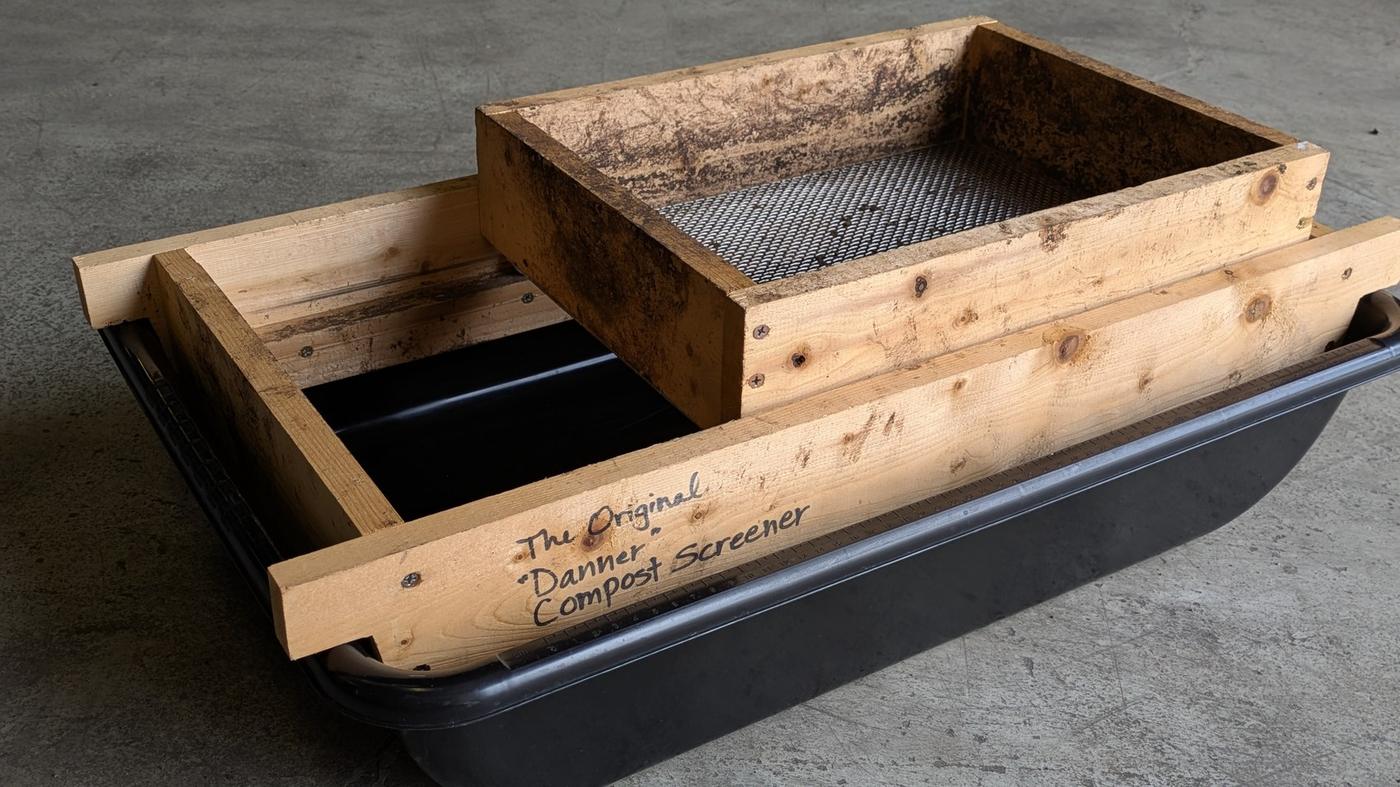
The Danner screener's wooden frame resting across a black mixing tub, with the rolling screen tray sitting on top of it.

What you will need

The full parts list is short, cheap, and available at any hardware store:

  • 2 x 1×4 common #2 plank, 8 ft
  • 1 x 1×2 cedar (7/8 x 1-1/2), 4 ft
  • 1 x 3/4 x 1/8 x 48 in steel flat bar
  • 5 x 1-1/2 in rigid casters
  • 1 roll 1/4 in hardware cloth (2 ft x 5 ft)
  • Screws: 26 x #8 x 1 in panhead sheet-metal, 16 x 2 in deck, 24 x 1-1/4 in deck

Tools: a saw, a drill, a screwdriver bit, and tin snips for the hardware cloth. That is it.

The exact cut list, drill guide, and assembly drawings are in the free download so you can build it right the first time.

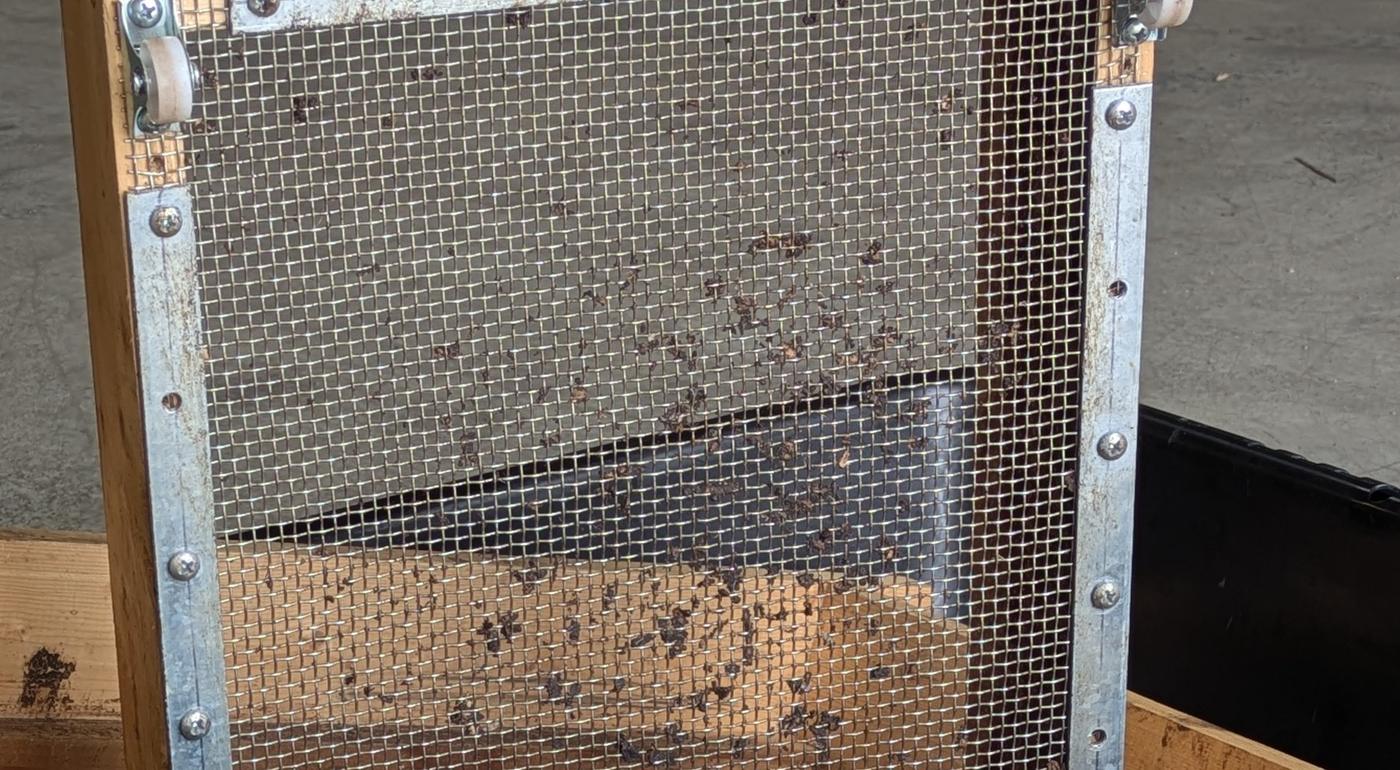
Close-up of the rolling screen's hardware cloth held down by steel strips, with a caster at the corner and bits of compost caught on the mesh.

How it works, step by step

  • Set the frame across the top of an empty 9-gallon mixing tub.
  • Place the rolling screen on the frame so its casters sit on the rails.
  • Shovel finished compost (or worm castings) onto the screen.
  • Roll the screen back and forth a few times.
  • Fine, finished compost falls through the 1/4 inch mesh into the tub. The chunky, unfinished bits stay on the screen.
  • Toss the leftovers back into the compost pile or worm bin to keep breaking down.
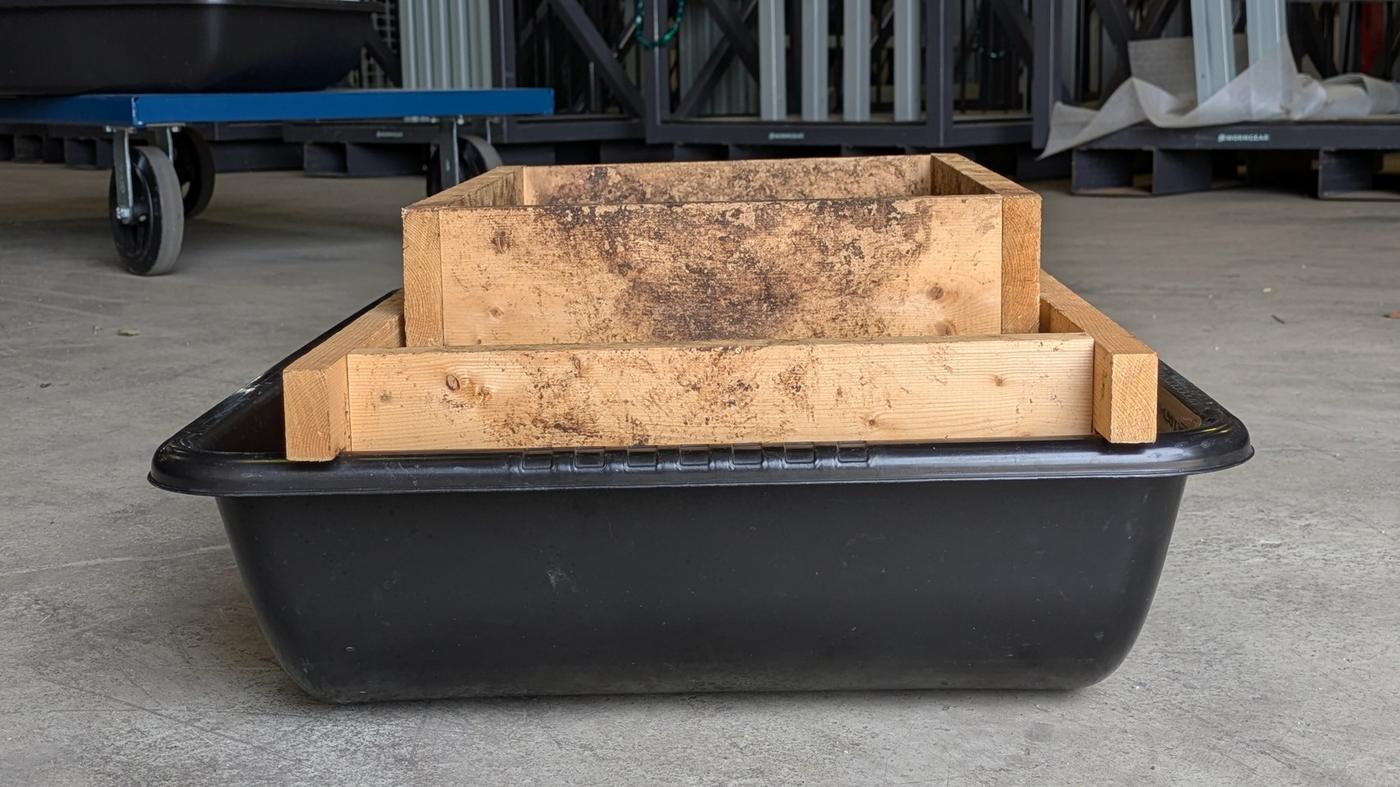
Side view of the wooden frame across the top of a black mixing tub, with the rolling screen sitting on the frame.

Want to build it? Grab the plans, free

If this looks like your kind of weekend, the plans are yours. Dan turned the original prototype drawing into a clean, printable PDF with every cut, every measurement, and the drill guide, so you can build it right the first time instead of guessing.

Just say where to send it. Drop your email below and the plans land in your inbox right away. No cost, no catch, just the blueprint that started the Turbo Sift™, plus the occasional composting tip and a first look at what Wormgear is building next.

From prototype to Turbo Sift™

Building the original is a genuinely satisfying weekend project, and for a single bin it still does the job. But the reason the Turbo Sift™ exists is that Dan kept using this prototype and kept spotting ways to make it better.

The Turbo Sift™ is what those years of sifting taught him: interchangeable screens so you can switch between coarse compost and fine castings, a build made to take daily abuse, and a smoother, more ergonomic motion. Same simple idea that started on a mixing tub, refined into a tool built for the long haul.

Build the prototype for the story and the weekend. Reach for the Turbo Sift™ when you want the finished thing.

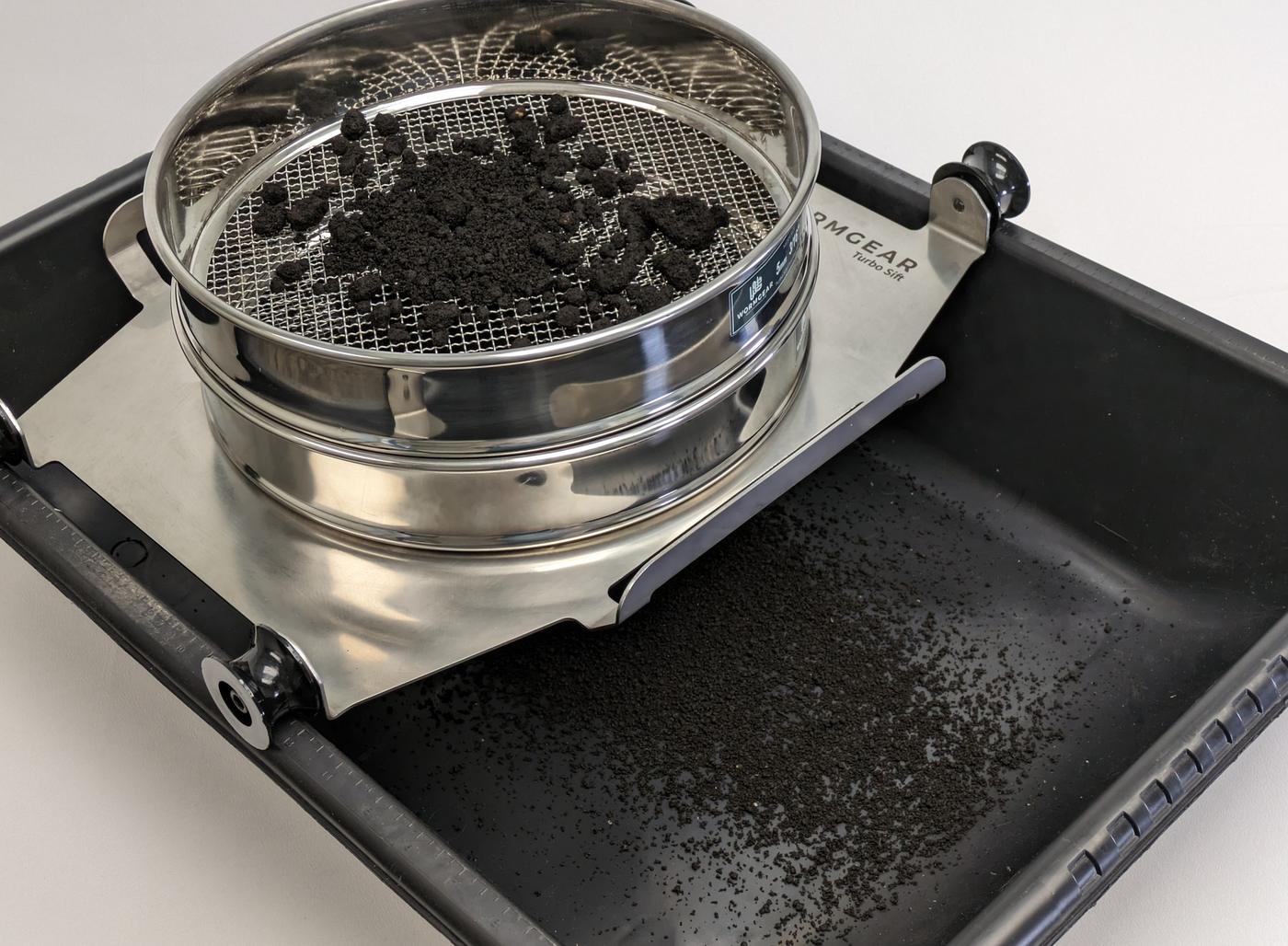
A Wormgear Turbo Sift sieve on its steel plate across a black tub, with finished dark compost sifted into the tub below.

Frequently asked questions

Is this the same as the Turbo Sift™? Not quite. This is Dan Lonowski’s original DIY prototype, the design the Turbo Sift™ grew from. The Turbo Sift™ is the engineered version, with interchangeable screens, a more durable build, and a smoother motion. The plans here let you build the original for yourself.

What size mesh should I use for sifting compost? A 1/4 inch hardware cloth is the sweet spot for general compost. It lets finished material through while catching most sticks and stones. For very fine worm castings or seed-starting mix, use a finer 1/8 inch mesh, though it sifts more slowly.

Can I sift worm castings with this? Yes. This design was built for vermicompost. A screen is one of the gentlest ways to harvest castings: the fine castings drop through while worms and cocoons stay on top so they can go back in the bin unharmed.

How long does it take to build? Most people finish in an afternoon. The cuts are straightforward and the parts list is short. Everything you need is in the free plans.

Ready to sift like a pro

A good sifter turns lumpy, half-finished compost into the clean, crumbly black gold your garden actually wants, and it keeps your worms exactly where they belong. Build Dan’s original prototype this weekend, or reach for the Turbo Sift™ it became when you are ready to level up.

Grab the free plans below and join the mission to make compost mainstream, one clean batch at a time.