
Grow With Vermicastings
This page covers why on-site production of vermicastings makes sense, and how growers put their castings to work.
You are farming, growing in a greenhouse, managing turf, or running any operation where soil microbiology matters?
Vermicastings are one of the highest-value inputs you can produce yourself.

Stop Buying Castings. Start Making Them.
If you are already using worm castings, you know what they cost. Bagged product adds up fast, and bulk orders, while cheaper per yard, still mean recurring costs, sourcing logistics, and dependence on someone else’s quality standards.
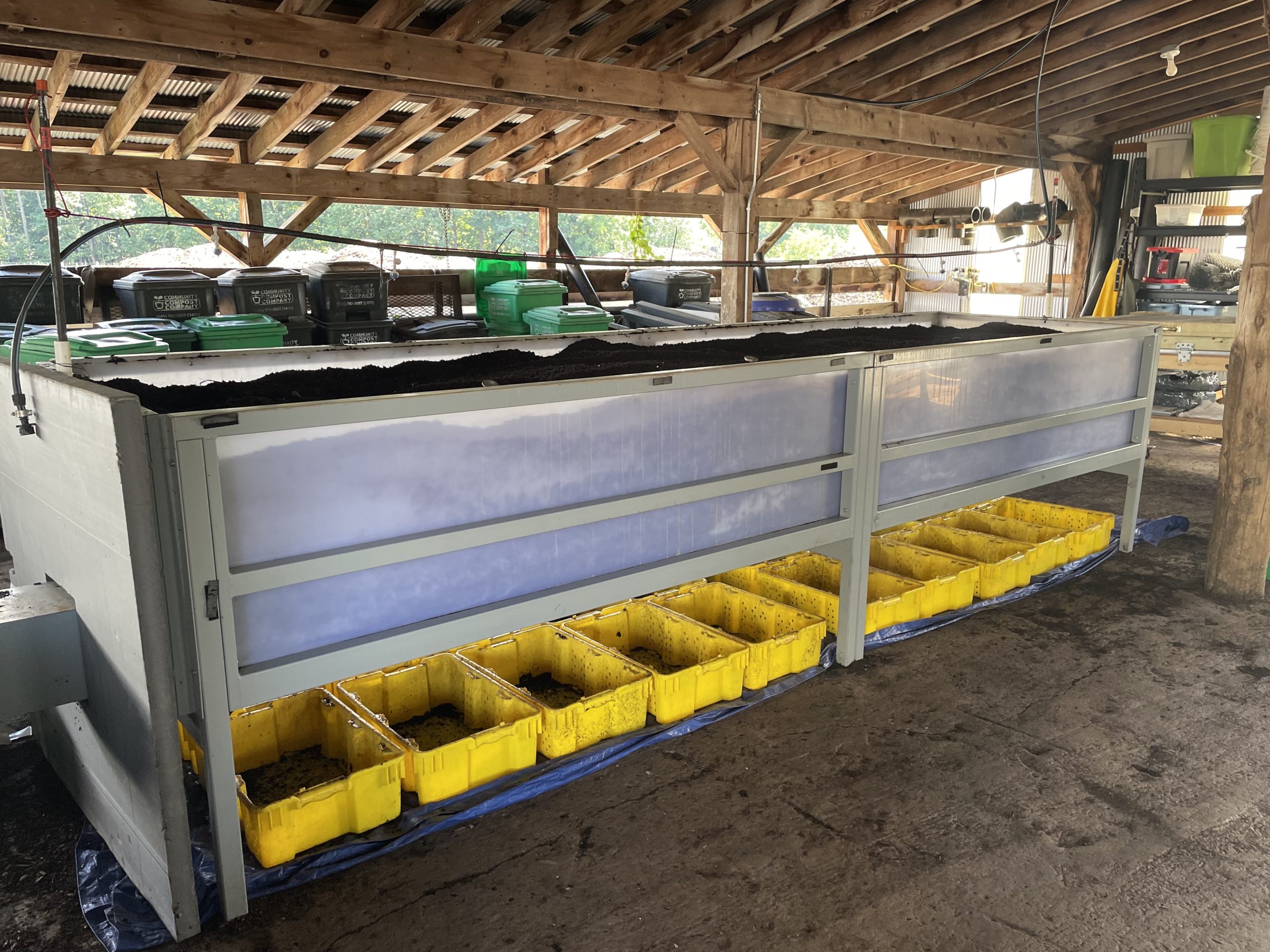
At a certain volume, the math flips. If you are purchasing two yards or more per year, producing your own on-site with a Wormgear CFT will cost less over time, and give you far more in return.
1. You control the quality.
You know exactly what goes in: clean feedstocks, your own byproducts, nothing you did not put there yourself. That consistency shows up in your castings, and in your crops.
2. You close a loop.
Crop residues, spent growing media, manure – your operation’s waste becomes your highest-value input.
3 .You get a living product, fresh.
No warehouse, no degradation in storage, no sitting outside in the sun. Instead you apply castings at peak biological activity.
4. You tell an authentic story.
Producing your own biological inputs from your own waste streams is the kind of practice that resonates with your soil and your customers alike.
It is good for your soil and good for your brand.
Turn Your Waste Streams Into Your Best Input
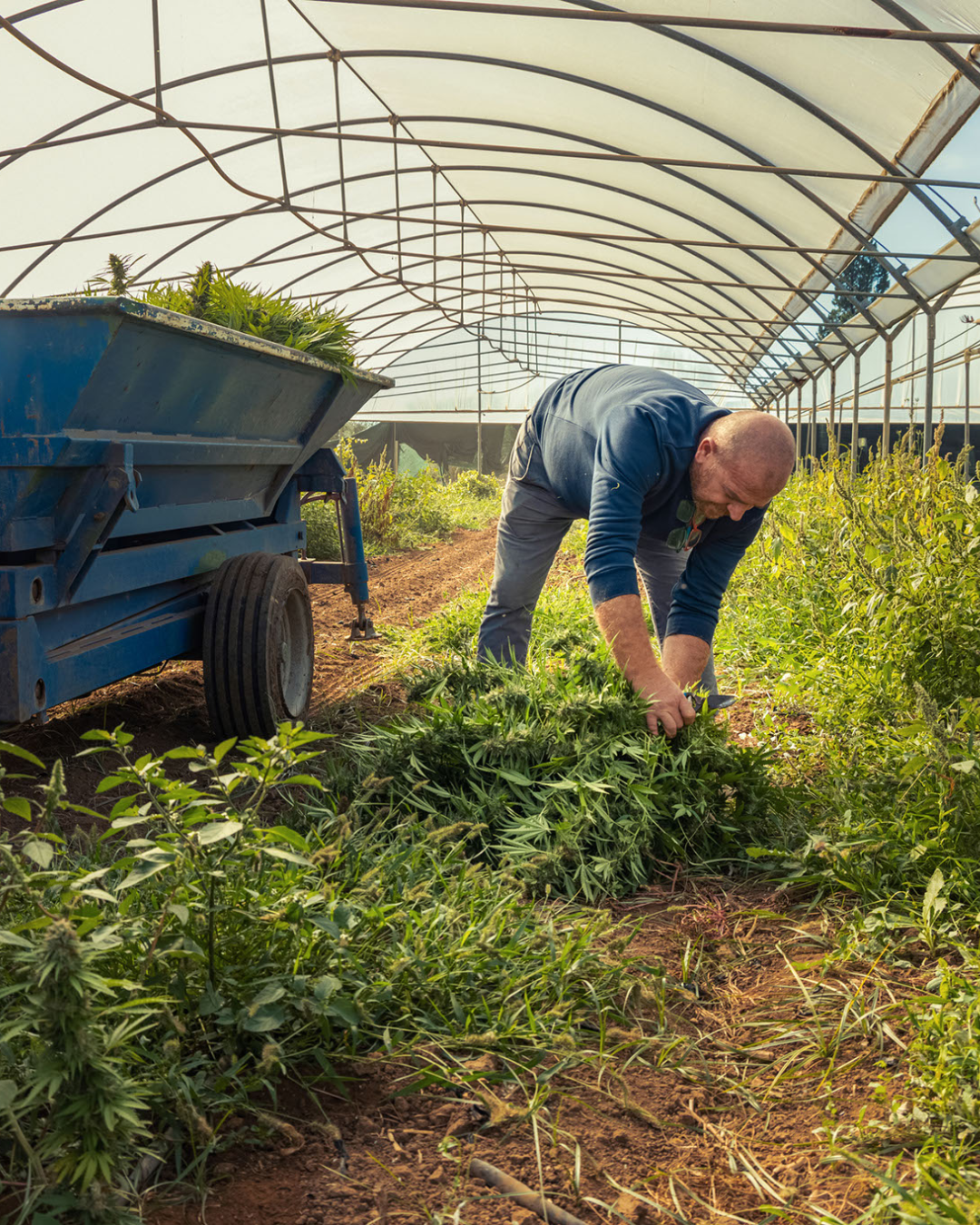
Most agricultural operations already generate organic material that could be feeding a CFT instead of being hauled away. Crop residues, spent bedding, hay and straw waste, food processing byproducts, manure from livestock or stables – all of it is potential feedstock.
For operations already managing manure (dairy, equine, poultry), a CFT turns a material that is often a disposal cost into vermicastings: one of the few outputs on the farm worth more per unit than what it started as.
KNOW THIS
Already composting on-site?
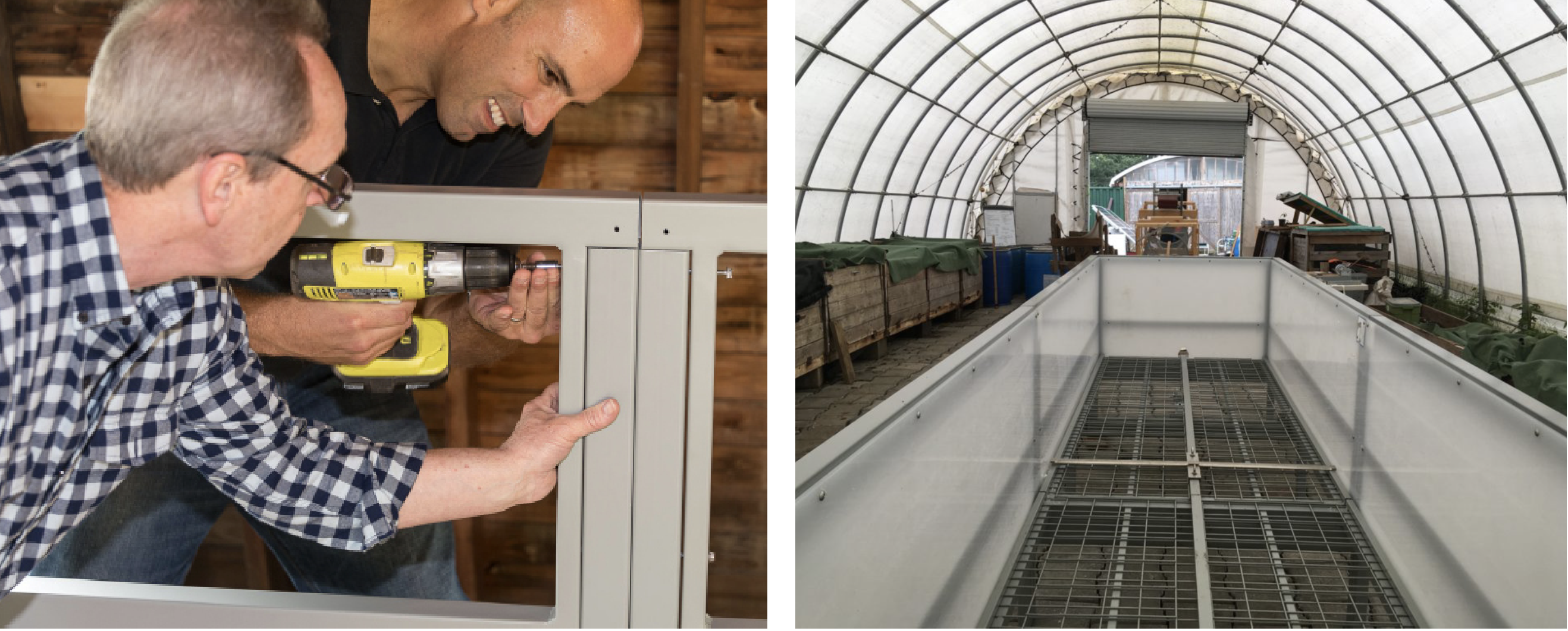
A CFT does not have to replace that – it can be complementary because pre-composted material is excellent feedstock for your composting worms.
How other Growers Put Their Castings to Work
Once you are producing on-site, you have a fresh, living biological input available whenever you need it – solid, as compost extract or actively aerated as compost tea.
Adding Vermicastings to Seedling & Transplant Mixes
The way a plant starts determines how it finishes. Incorporating vermicastings into your seedling or transplant mix gives young plants immediate access to a biologically active growing medium that supports root development, nutrient availability, and early vigor even before your seeds start sprouting.
Instead of dressing seeds with a fungicide or even a neonicotinoid, microbial driven farming starts with a coating of a diverse vermicompost.
The difference is not just chemical – it is biological. Vermicastings introduce the microbial communities healthy roots depend on, right when they are needed most.
Trials with crops including lettuce, tomatoes, and beans have shown higher germination percentages and stronger early shoot growth in vermicast-amended mixes compared to sterile or synthetic alternatives.
For greenhouse operators, nurseries, and transplant producers running high volumes, an on-site supply means your seedling mix quality is never at the mercy of an outside supplier.
Root Zone Application & Soil Incorporation
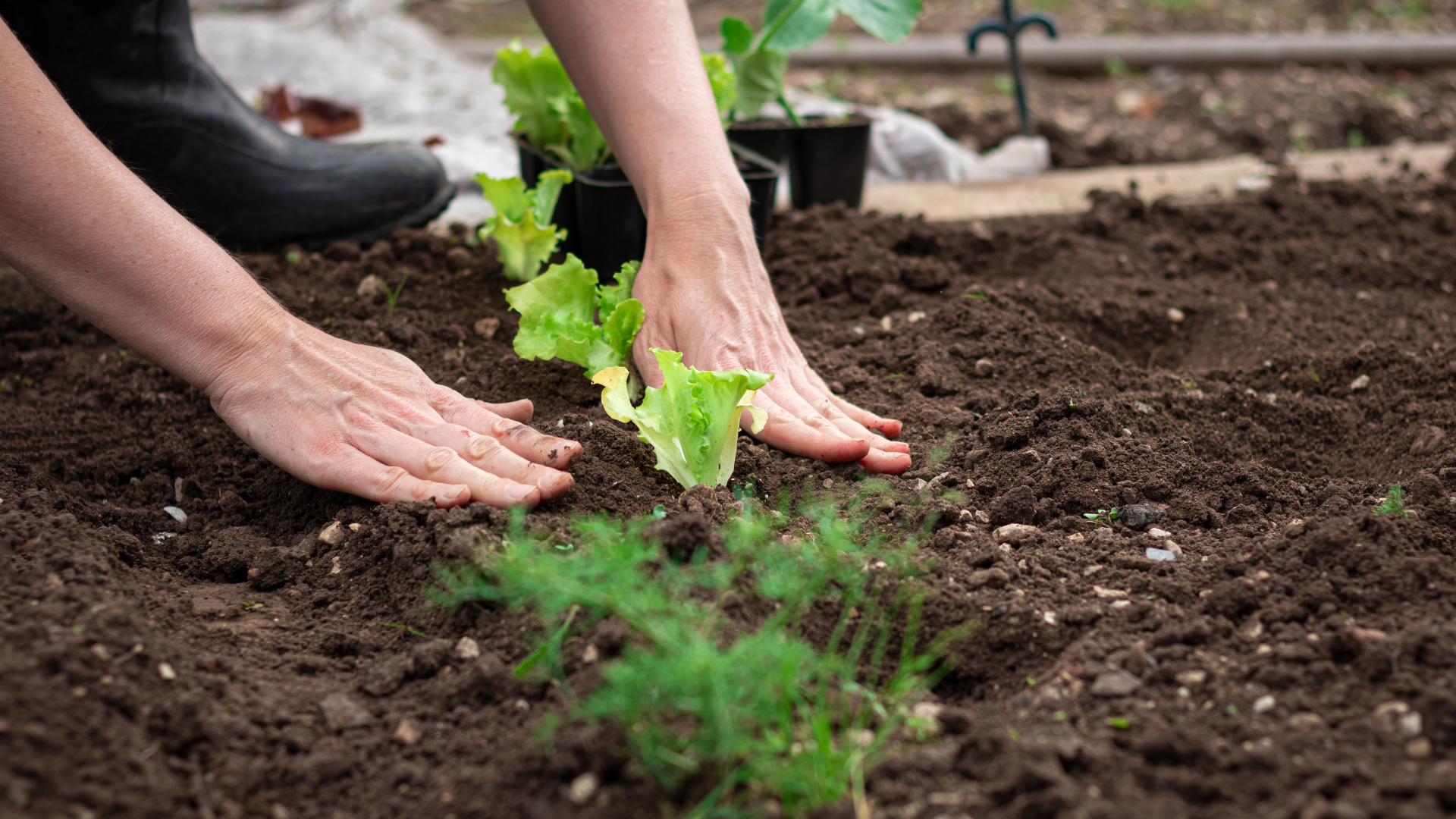
Applying vermicastings to the root zone – worked into the soil at planting, side-dressed during the season, or delivered as extract through drip irrigation – puts living biology exactly where roots are actively growing.
Research consistently shows vermicastings stimulate root and shoot development and vegetative growth, and notably, even when plants are already receiving optimal nutrition. For growers running strong fertility programs, castings are a biological amplifier of their inputs.
For certified organic operations, the value is even more direct: castings deliver nutrients in plant-available forms, from a feedstock you control, with no synthetic inputs in the chain.
Foliar Application of Vermicast Extract
Vermicast extract applied as a foliar spray delivers soluble nutrients and microbial metabolites directly through the leaf surface – a fast-acting complement to soil applications, particularly during critical growth stages or stress periods.
Studies have shown foliar applications of vermicast extract can support natural disease resistance without chemical alternatives – a meaningful tool for growers managing disease pressure in cannabis, greenhouse crops, or high-value horticulture, and one that fits within organic and regenerative protocols.
With a Wormgear CFT producing fresh castings on your property, you control the quality and timing of every brew.
Coating Seeds With Vermicast Extract
Coating seeds with vermicast extract before planting delivers biological activity directly where germination happens: beneficial microbes and growth-promoting compounds on the seed surface, giving each seed a head start before it enters the ground.
Research on vermicast-based seed coatings shows formulations combining extract with other bio-based materials can meaningfully increase seedling vigor index compared to untreated controls.
For row crop producers, consistent germination improvements like that compound across large acreages and often go hand in hand with a reduction in cost of synthetic inputs.
Produce your extract from your own fresh castings, coat your seed, and go.
Got More Than You Need? Sell It.
Some growers produce more castings than they use, and surplus sells well, especially bagged for home gardeners or in bulk to neighboring operations. Most operations, though, use everything they produce. Either way, the math works.
Ready to produce your own?
There is a lot to think through: feedstock, space, throughput, and how a CFT fits your operation. That is exactly what we are here for. Whatever your reason, Wormgear is with you.