

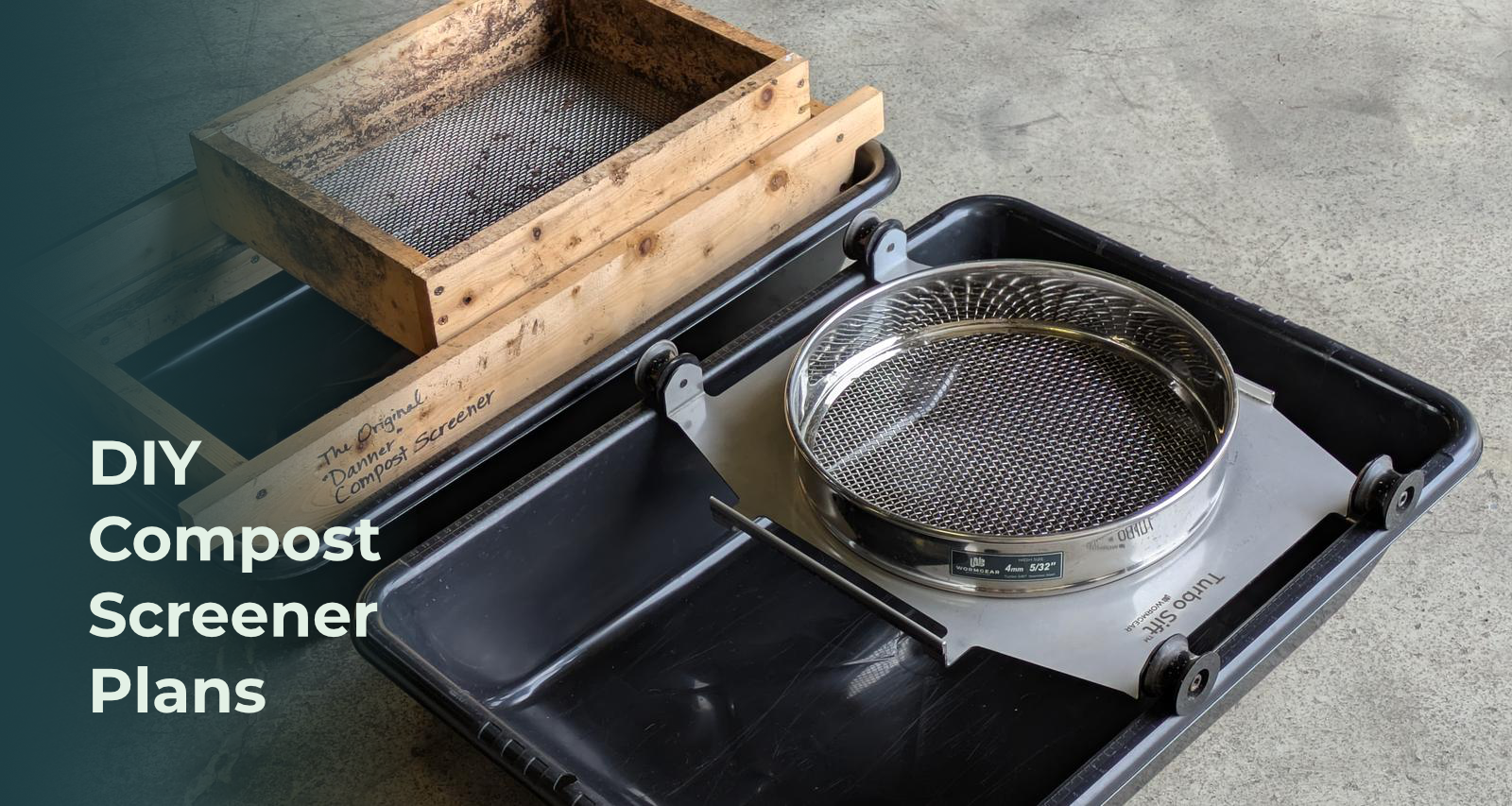
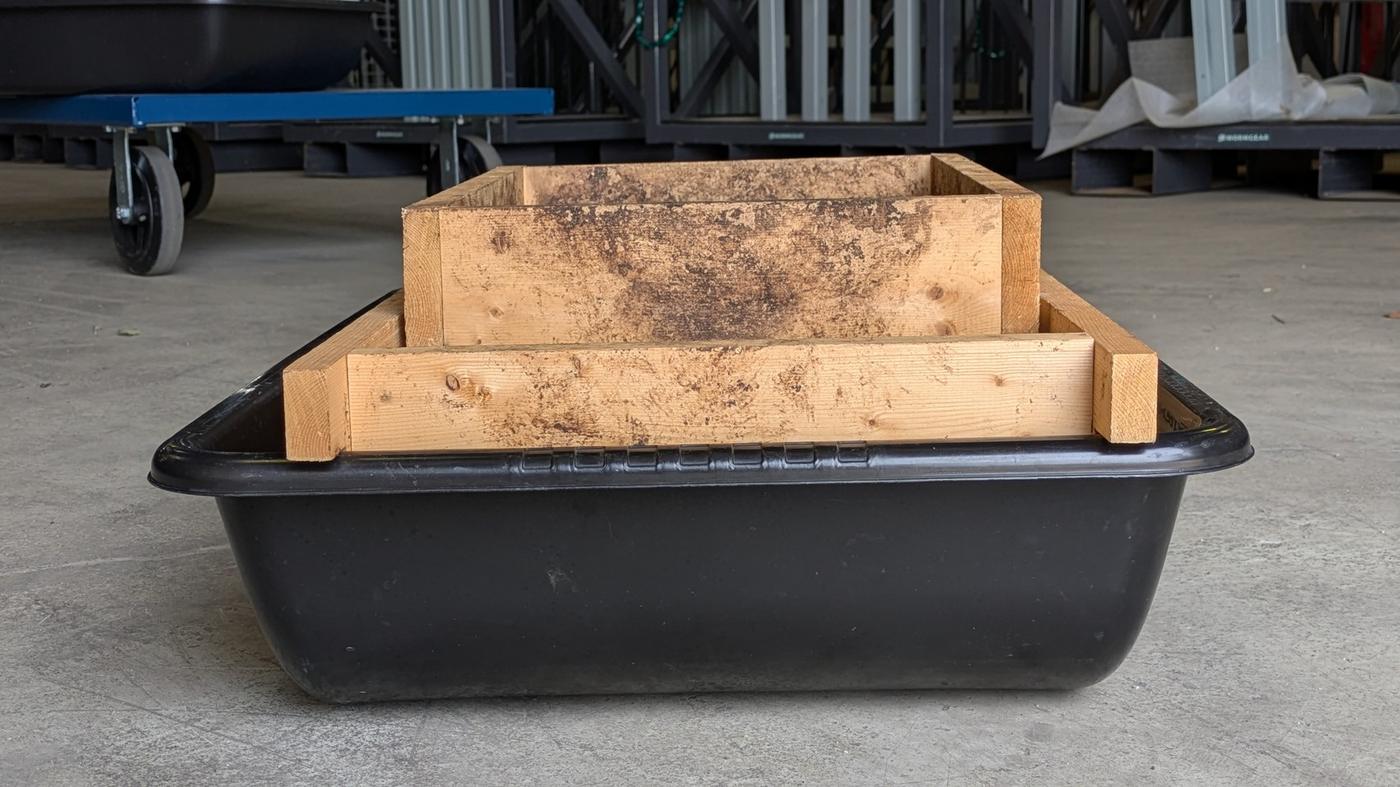
Before there was a Turbo Sift™, there was a simple rolling screen built to drop right into a 9-gallon mixing tub.
Dan Lonowski, the founder of Wormgear, built it in 2015 when a friend asked for help screening his vermicompost.
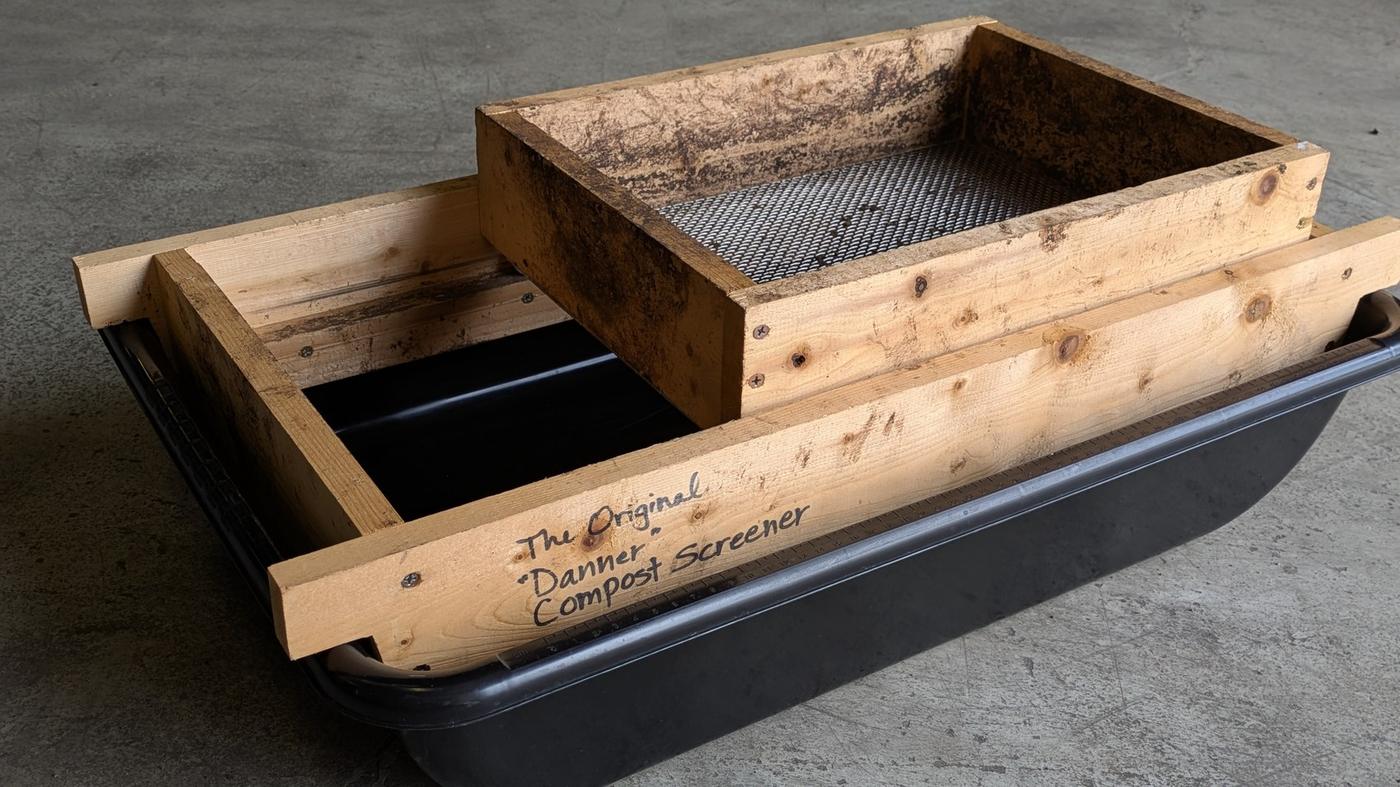
A screen on casters rolls back and forth over a frame that rests on the tub. Load it, roll it, and sifted compost drops through while the chunky bits ride along on top. This is the original design the Turbo Sift™ was built from.
This guide is for home composters and worm farmers who want to sort their worms, cocoons, compost and castings.
Why sift your compost and castings?
Worm farmers who sell worms and castings have different reasons for screening their vermicompost.
Uniform material
Screening pulls out large chunks of worm bedding that can further decompose. That material is recycled as fresh worm bedding. The screened castings are ready to be sold.
Screening Worms
When breeding compost worms, there is a time when the herd has to be separated. Large worms can be selected to sold, smaller worms go back in the breeding bins.
Screening Worm Cocoons
Some worm farmers like to separate cocoons to inoculate new breeding bins. Use a small screen to collect them.
Material List Vermicompost Screener
The full parts list is short, affordable, and available at any hardware store:
- 2 x 1×4 common #2 plank, 8 ft
- 1 x 1×2 cedar (7/8 x 1-1/2), 4 ft
- 1 x 3/4 x 1/8 x 48 in steel flat bar
- 5 x 1-1/2 in rigid casters
- 1 roll 1/4 in hardware cloth (2 ft x 5 ft)
- Screws: 26 x #8 x 1 in panhead sheet-metal, 16 x 2 in deck, 24 x 1-1/4 in deck
Tools: a saw, a drill, a screwdriver bit, and tin snips for the hardware cloth. That is it.
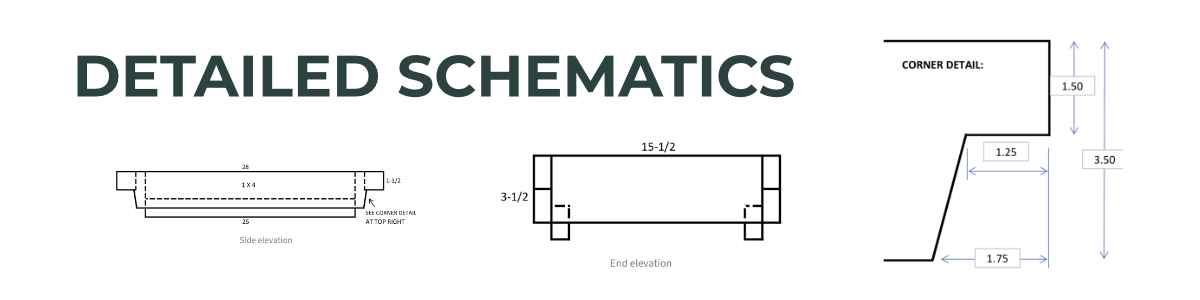
The exact cut list, drill guide, and assembly drawings are in the free download so you can build it right the first time.
How the screener works
- Set the frame across the top of an empty 9-gallon mixing tub.
- Place the rolling screen on the frame so its casters sit on the rails.
- Shovel finished compost (or worm castings) onto the screen.
- Roll the screen back and forth a few times.
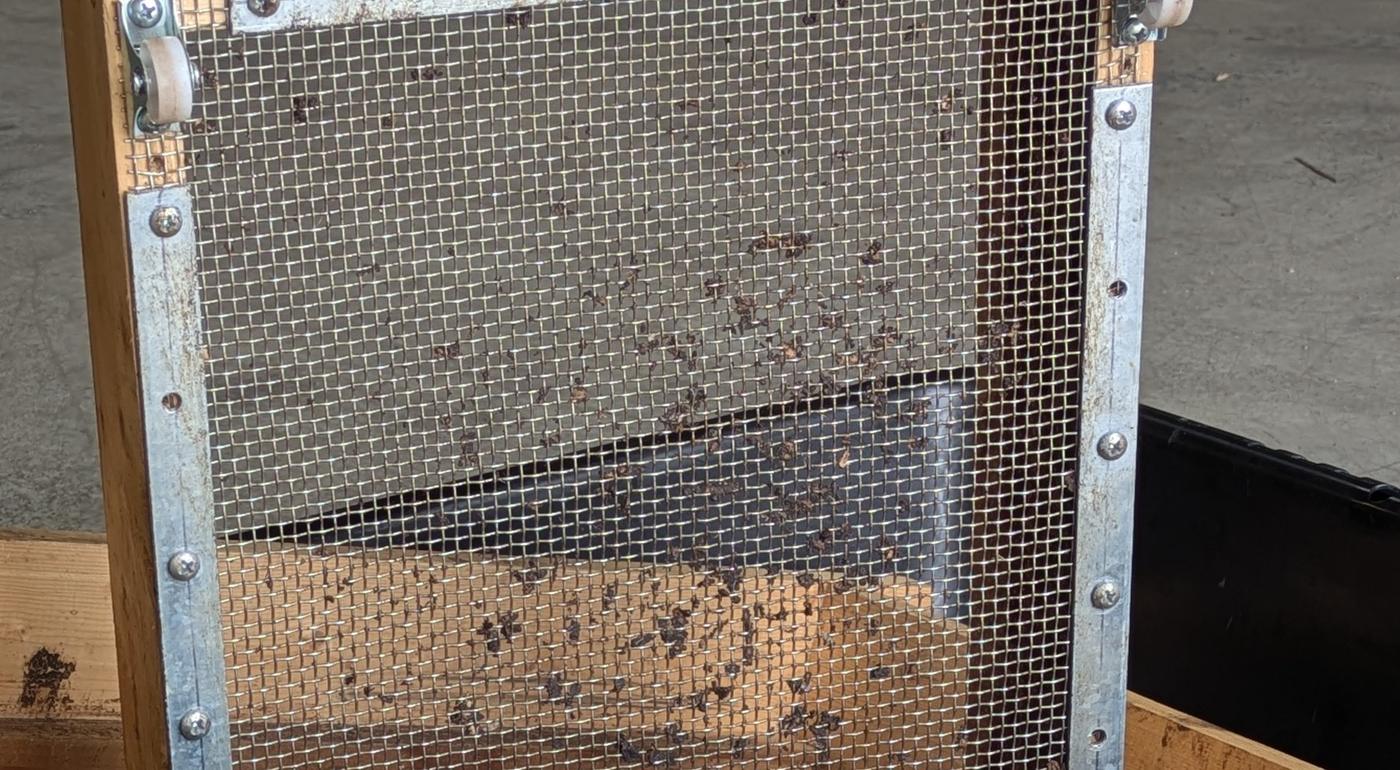
- Fine, finished compost falls through the 1/4 inch mesh into the tub. The chunky, unfinished bits stay on the screen.
- Toss the leftovers back into the compost pile or worm bin to keep breaking down.
Want to build the compost screener? Download the free plans
If this looks like your kind of weekend, the plans are yours. Dan turned the original prototype drawing into a clean, printable PDF with every cut, every measurement, and the drill guide, so you can build it right the first time instead of guessing.
Just say where to send it. Drop your email below and the plans land in your inbox right away. No cost, no catch, just the blueprint that started the Turbo Sift™, plus the occasional composting tip and a first look at what Wormgear is building next.
From prototype to Turbo Sift™
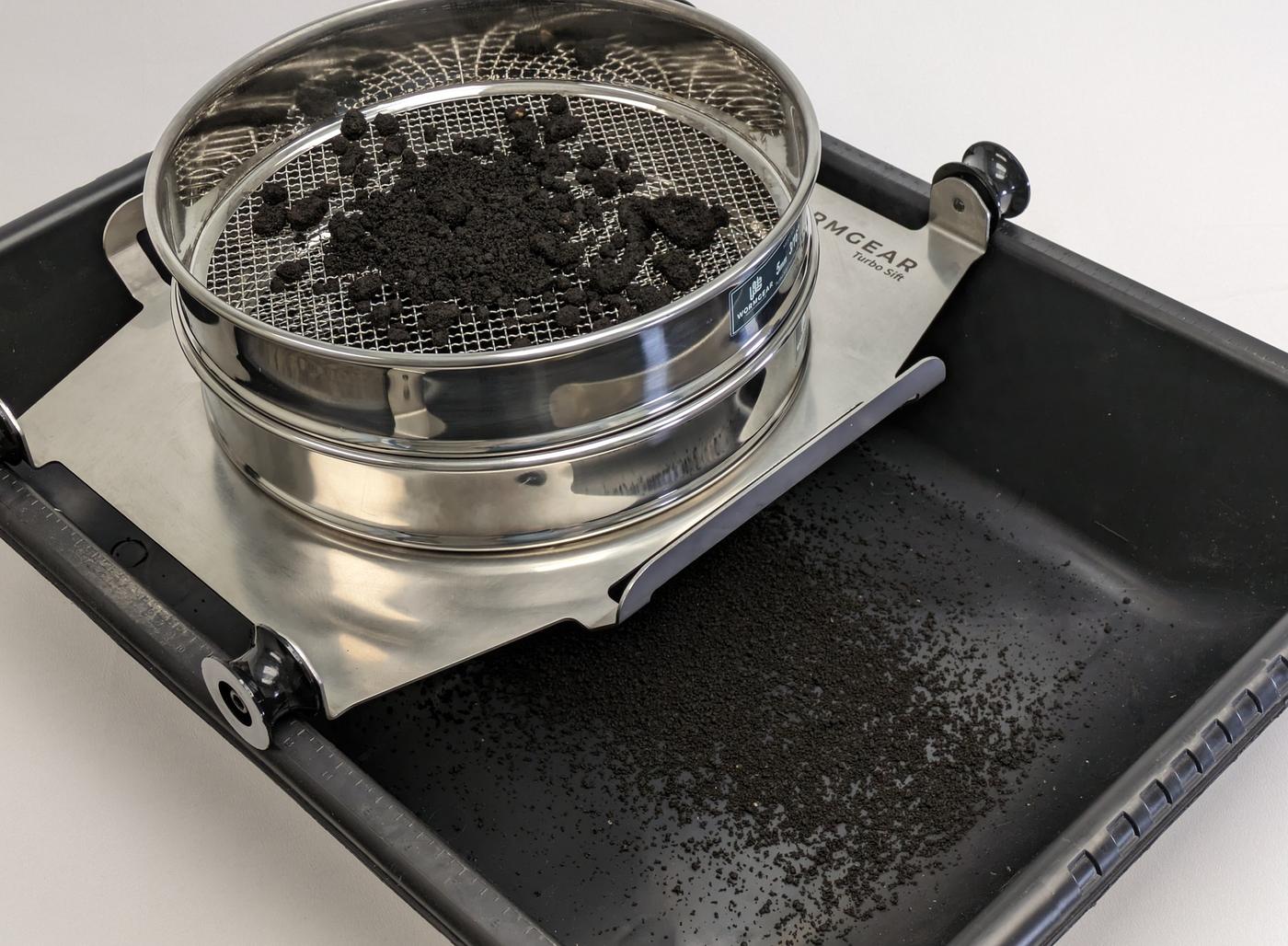
Building the original is a genuinely satisfying weekend project, and for a single bin it still does the job. But the reason the Turbo Sift™ exists is that Dan kept using this prototype and kept spotting ways to make it better.
The Turbo Sift™ is what those years of sifting taught him: interchangeable screens so you can switch between coarse compost and fine castings, a build made to take daily abuse, and a smoother, more ergonomic motion. Same simple idea that started on a mixing tub, refined into a tool built for the long haul.
Build the prototype for the story and the weekend. Reach for the Turbo Sift™ when you want the finished thing.
Frequently asked questions
Is this the same as the Turbo Sift™?
Not quite. This is Dan Lonowski’s original DIY prototype, the design the Turbo Sift™ grew from. The Turbo Sift™ is the engineered version, with interchangeable screens, a more durable build, and a smoother motion. The plans here let you build the original for yourself.
What size mesh should I use for sifting compost?
A 1/4 inch hardware cloth is the sweet spot for general compost. It lets finished material through while catching most sticks and stones. For very fine worm castings or seed-starting mix, use a finer 1/8 inch mesh, though it sifts more slowly.
Can I sift worm castings with this?
Yes. This design was built for vermicompost. A screen is one of the gentlest ways to harvest castings: the fine castings drop through while worms and cocoons stay on top so they can go back in the bin unharmed.
How long does it take to build?
Most people finish in an afternoon. The cuts are straightforward and the parts list is short. Everything you need is in the free plans.